WEBSITE TRANSLATION


THE MOON IN ANCIENT HISTORY
(Ancient Astronomical Calendars)

|
Astronomical calendars have been in existence for thousands of years. For our ancient ancestor's time was measured by the number of Moons that had passed from a certain period, and by the shadows that the Sun and Moon cast.
|
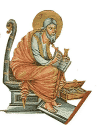 | The Sun, Moon, planets, and stars have provided us a reference for measuring the passage of time throughout history. All cultures before recorded history charted the heavenly skies to make some sort of sense out of their environment. |
|
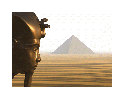
Ancient time keepers were usually Sages, Magi, or astrologer-priests who guarded the sacred records in their rock temples in India, on their ziggurats in Babylonia or their stone observatories and pyramids in Egypt. They calculated that a month was the period the Moon revolved around the Earth, and from this understanding various Lunar Calendars evolved. Until the time of Julius Caesar, the calendar was primarily lunar, with various schemes devised to keep step with the cycle of seasons. When measured in this fashion, lives ebbed and flowed in a 29.53059 day cycle.

 The first type of calendar to come into use is the lunar calendar. This calendar follows the lunar phase cycle without regard for the seasonal or tropical year. The first type of calendar to come into use is the lunar calendar. This calendar follows the lunar phase cycle without regard for the seasonal or tropical year.
|
| The earliest Egyptian calendar was based on the Moon's cycles. Later, however, it developed into a 365 day solar calendar around 4236 BC. when they began to notice the "Dog Star" Sirius rising next to the Sun every 365 days, marking the time when the Nile river also began its annual flood tide. |


 The Lunar Year: A Glow-in-the-Dark 2017 Wall Calendar
by Universe Publishing (Author)
(This one's a Honey!)

 |
All Rights Reserved Click here for Copyright information |
A member of 
|

| ||