MOON LEGENDS AND TALES

|
 |
|

- Legend tells that, if in the moonlight of Hoshana Rabbah, on the seventh day
of the Sukkot, an individual casts no visible shadow from their forehead upon
the Earth, then it is their destiny to die during the approaching year. -
--An Ancient Jewish legend



|
The Moon
The moon has a face like the clock in the hall;
She shines on thieves on the garden wall,
On streets and fields and harbour quays,
And birdies asleep in the forks of the trees.

The squalling cat and the squeaking mouse,
The howling dog by the door of the house,
The bat that lies in bed at noon,
All love to be out by the light of the moon.
But all of the things that belong to the day,
Cuddle to sleep to be out of her way;
And flowers and children close their eyes
Till up in the morning the sun shall arise.

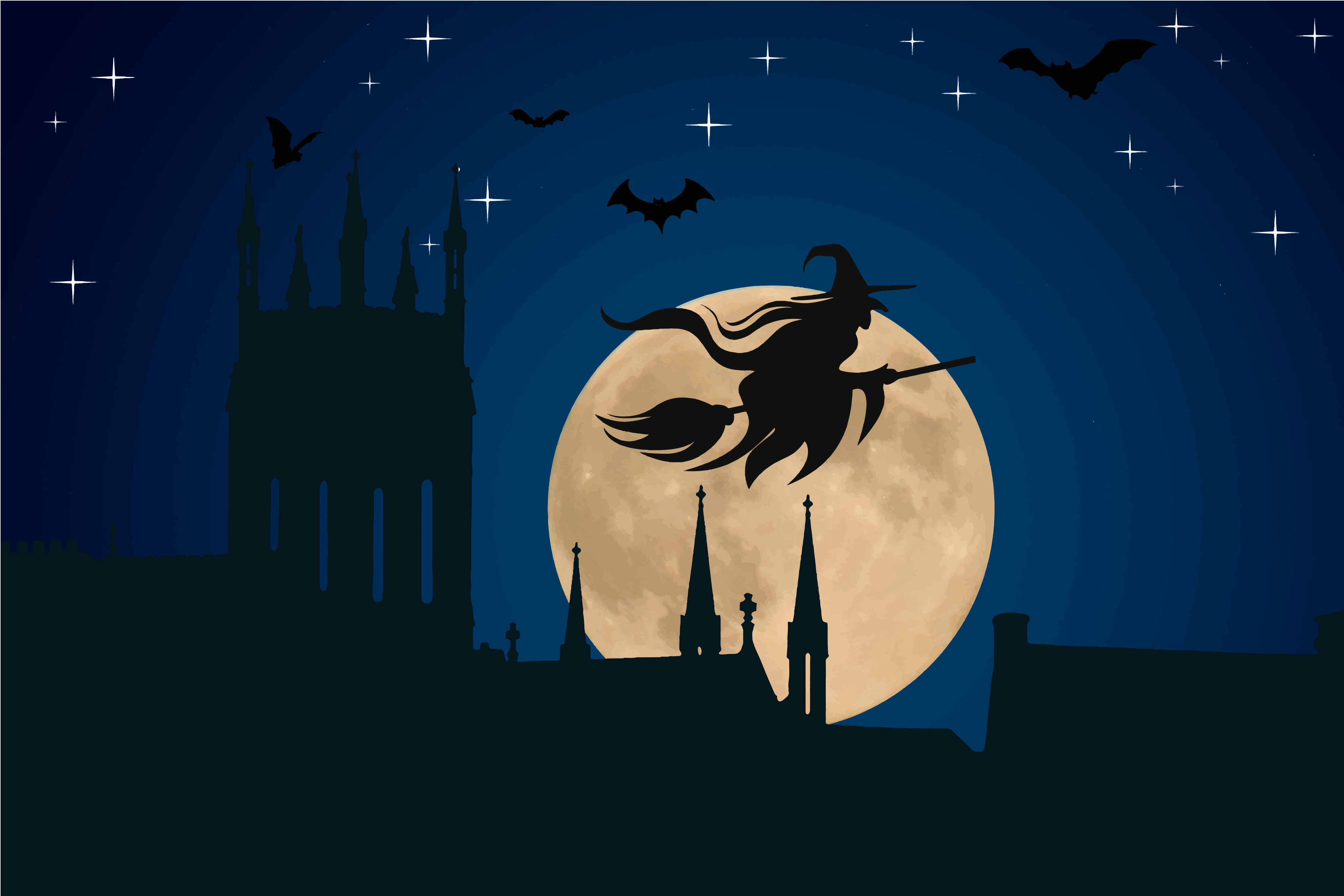
From ghosts to goblins, werewolves and phantoms to the present day hauntings of Edgar Allen Poe, Vincent Price and Boris Karloff. To the Science Fiction writers of Moon tales, from Jules Verne to Arthur C. Clarke; to Loony tunes and just plain lunacy, the Moon's allure is a nightly drama.
Moon lore is so ancient, casting shadows into our sleeping hours, striking fear, awe and wonderment in nearly all who hear the tales, as the primordial chord it strikes reaches into our very psyches. The archetypal images cut deep as the nocturnal wanderer absorbs all that is good or all that is evil, returning it to us in legend, tale, poem and song.
There have been many legends of werewolves throughout the centuries depicting human beings changing into werewolves by the light of the Full Moon. In 1941, Maria Ouspenskaya wrote her famous book "The Wolf Man," which brought the first Hollywood Werewolf movie to the screen. The Wolf Man was released in 1941 with a run time of 70 minutes, and was directed by George Waggner. The "Wolf Man" cast included Maria Ouspenskaya as well as Lon Chaney, Jr., Bela Lugosi, Claude Rains, Evelyn Ankers, Ralph Bellamy, Patric Knowles, Warren William, Fay Helm and Forrester Harvey.
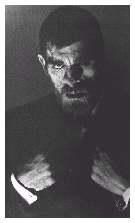
( Boris Karloff, King of Horror)

Oldest Science Fiction Moon Stories
More Online Stories (The Stories Link)
A list of links to stories online involving the Moon
(from Chinese prose and tales to H.P. Lovecraft)

The Cabinet of Dr Casey- The horror web pages:



Native American Indian Moons - Did You Know That...
Fun Moon Fact #483:
Did you know that the Moon is mentioned exactly
171 times throughout the collected works of William Shakespeare?


|
|---|
GLOW-IN-THE-DARK CALENDAR AVAILABLE NOW "Lunar 2015 Glow-in-the-Dark Wall Calendar" |
 Interesting Moon Links